

A blackjack or roulette title may look familiar online while using different rules, outcome systems and wager controls from its physical counterpart. PlayNow's British Columbia guidance describes those distinctions for its own catalogue. Interface work begins with the selected game's procedure and the state a player needs to see.
Shared game names do not guarantee identical versions
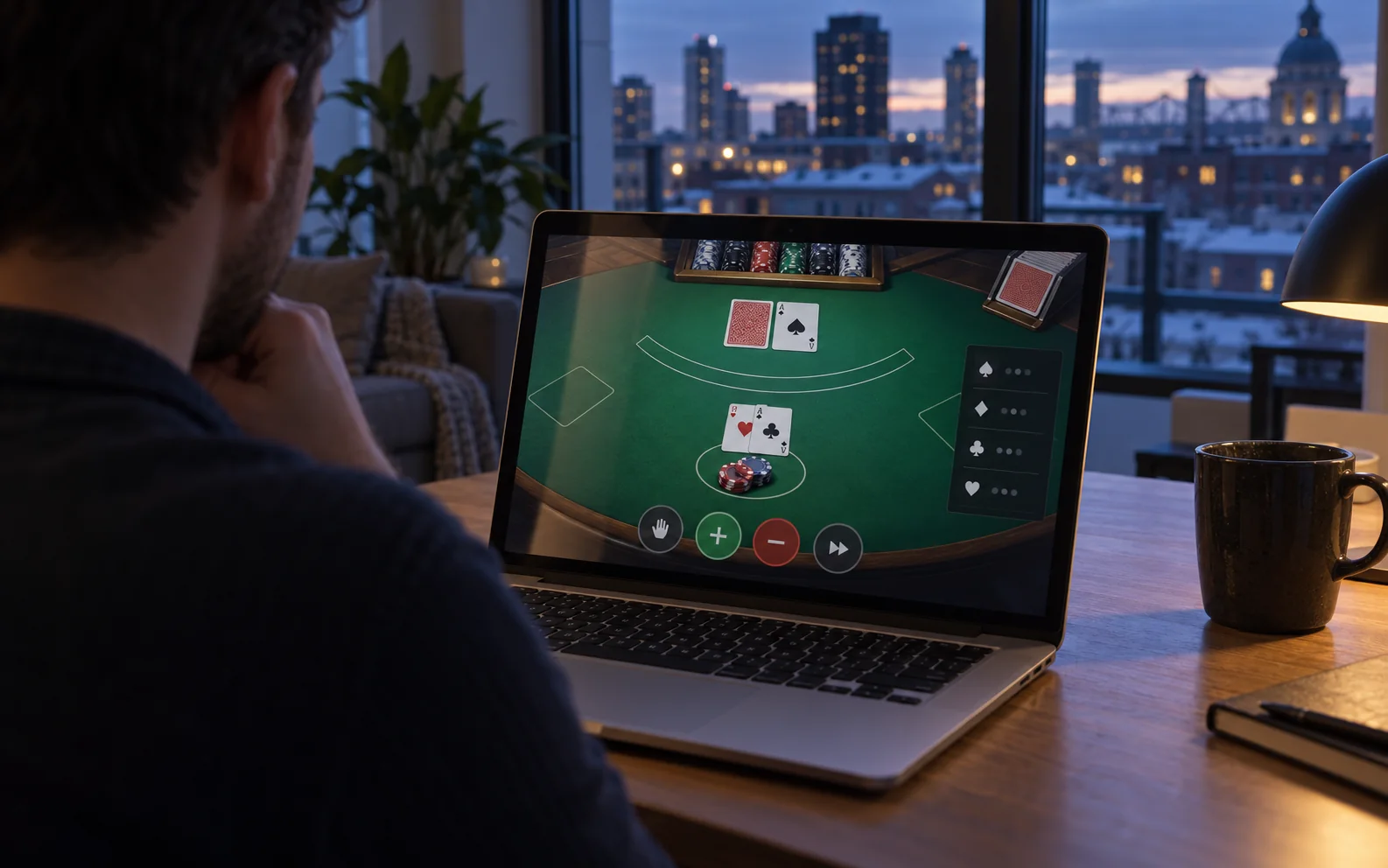
At a physical blackjack table, dealt cards and placed chips show the state of play. A digital version must render that state through controls, animation or video and keep the wager and result in the account record. A felt background can signal the game family, but the rules and outcome mechanism depend on the particular approved title.
BCLC's PlayNow help page says its online catalogue contains titles and versions similar to those at land-based casinos and gaming centres, alongside different versions and PlayNow-only features. A designer therefore needs the rules for the selected online title; a photograph of the physical table cannot provide them.
PlayNow's B.C. casino page describes online versions of baccarat, slots, poker, blackjack and roulette, and states that outcomes for its online casino games are determined by a random number generator in the game's software. A live dealer product follows a different production model: physical game events are captured on video and presented alongside the digital betting interface. Those are separate formats, even when the title or table layout looks familiar.
Keep appearance separate from game mechanics
A digital roulette layout can display familiar numbers and table markings while the outcome is determined by software. A live roulette feed can show a physical wheel while wagers are selected through interface controls. The shared graphic language does not make those two systems identical. Product text should identify the actual format and the rules in force.
Translate table actions into explicit controls
A physical action has a digital counterpart only when the interface tells the player what to select and confirms what the selection means. A chip on felt can be seen in relation to a betting area; a digital wager needs an amount, a target and a visible confirmation before the game accepts it. A card-game decision should name the available action rather than rely on an icon whose meaning changes between titles.
| Table-game moment | Digital control or display | Information to confirm |
|---|---|---|
| Choose a wager | Amount selector and game-position control | Selected amount, target and whether the wager is accepted |
| Make a blackjack decision | Named Hit, Stand or other permitted action | Which hand is active and which action will be applied |
| Wait for a result | Round-status indicator | Whether the game is still taking wagers, resolving or complete |
| Read the outcome | Result and settlement record | Outcome, payout or return status and next available step |
| Open a live table | Video feed plus betting controls | Which parts are dealer actions and which are player inputs |
The exact buttons depend on the rules of the game. BCLC's table-game help states that each title has its own rules and an in-game help section covering how to wager, win and what a winning result pays. For Blackjack, its help explains that a decision such as hit or stand can remain pending while the player closes the game screen or performs another action; on return, the player is prompted to complete an unfinished hand before continuing that game.
Show the consequence before the control is pressed
A control label should match the action in the game's rule set. Keep selected wagers distinct from available balance, and show whether a game has accepted the action. If a button becomes unavailable during a round, indicate why and when the next decision can be made. These details reduce the gap between what the player taps and what the system records.
Treat a round as a sequence of visible states
A game screen has to show more than a table picture. It needs to make the current round state legible: betting open, wager registered, outcome in progress, decision required, result settled or next round ready. The order depends on the game. A digital version should identify the transitions that matter to the rules and display each one in a way that remains available to the player.
For a blackjack hand, the player may need to distinguish an active decision from a completed hand. For roulette, a new round must not be confused with the previous result. For a live dealer table, the player also needs to distinguish the video stream from the controls used to submit a wager. A status label, event history or confirmation can carry information that a physical dealer's gesture would otherwise communicate.
Record these states for each game
- whether a wager is open or closed
- which action is currently required from the player
- whether the game has received that action
- what result is final and what is still pending
- whether account funds or game state changed
- what appears after an interruption or reconnection
If an interface supports leaving a game during an unfinished action, the return path needs a known state. PlayNow's blackjack example shows one implementation: the game waits for a decision, and an unfinished hand must be completed before another hand can begin. That fact belongs to the specific product; another game may follow another approved procedure.
Rules, payouts and demonstrations beside the game
A digital interface needs a clear path to rules and game information. The pay table, wager limits, decision rules and description of a round should correspond to the exact title and version being opened. A shared help page may explain general terms, but game-specific decisions belong with the selected game.
PlayNow's public guidance describes an in-game Help section for table-game rules, wagering, winning and payout information. It also offers demos for many online casino games and directs players to game rules and pay tables for individual slots. A demonstration should be identified as a demo; it should not look like a completed real-money round or imply that the game result predicts a later outcome.
| Information | Why it matters to the interface | Version detail to retain |
|---|---|---|
| Rules | Defines valid player actions and round sequence | Game title, variant and revision date |
| Wager limits | Sets what can be selected and accepted | Currency, minimum/maximum and market |
| Payout information | Explains the result shown after settlement | Pay table or rules applicable to the displayed game |
| Demo mode | Lets users inspect controls without a live wager | Demo label and any difference from real play |
| Live dealer format | Separates streamed physical action from interface input | Studio/game feed and current table rules |
Do not treat a digital animation as an explanation
An animation can show cards moving or a wheel stopping, but a moving image alone may not explain which rule produced the result. Use visible labels and result information alongside the animation. Where the game provides an accessible rules page, link to it from the active table and identify which version the page describes.
Separate randomised games from live dealer tables
An RNG game and a live dealer game can share the same game family, but their interfaces do different work. A software game displays a generated result and its rules; a live dealer interface carries a video of physical play and the player's digital wager input. The visible wheel or cards in a live stream should not be described as the software outcome process of an RNG game.
In B.C., PlayNow places Live Casino in a separate portfolio from its electronic casino games. Its help material explains that clicking a live table tile opens the live game, that a person can watch a table without taking a seat or wagering, and that live-game chat is separate from general account support. Those are service-specific interface details, but they show why a live table needs routes for video, game interaction and account help.
For a designer, the separation starts with the content model. Mark which data comes from game software, which information comes from a streamed dealer table and which account details belong to the operator. Label live and RNG formats, make their controls consistent where appropriate and keep the rules available for each individual version.
Use the Canadian approval context in the design handoff
Ontario requires games and supporting critical gaming systems to be certified by an independent testing laboratory registered with AGCO before they are offered. A visual review checks the player's interface; the certification record covers the game and its supporting system.
A Canadian design handoff should identify the exact rules, game version, outcome model, controls, help material, result states and market where the product is intended to appear. The operator and suppliers can then connect the user-facing interface to the certified game and required account systems. For British Columbia, PlayNow's public materials provide a local example of electronic games, live casino and game-specific help; for Ontario, the relevant approval path is separate.
A handoff record for a digital table game
- market and operator
- game title, variant and rules revision
- RNG, electronic table or live dealer model
- wager controls and decision states
- settlement and interruption behavior
- game rules, payout information and demo status
- technology certification and release owner
The release review should replay a full round against the approved game specification: wager, decision points, result and account record. If a rule or supporting system changes, the associated control, state label and help route need another review. A familiar table graphic cannot substitute for that comparison.