
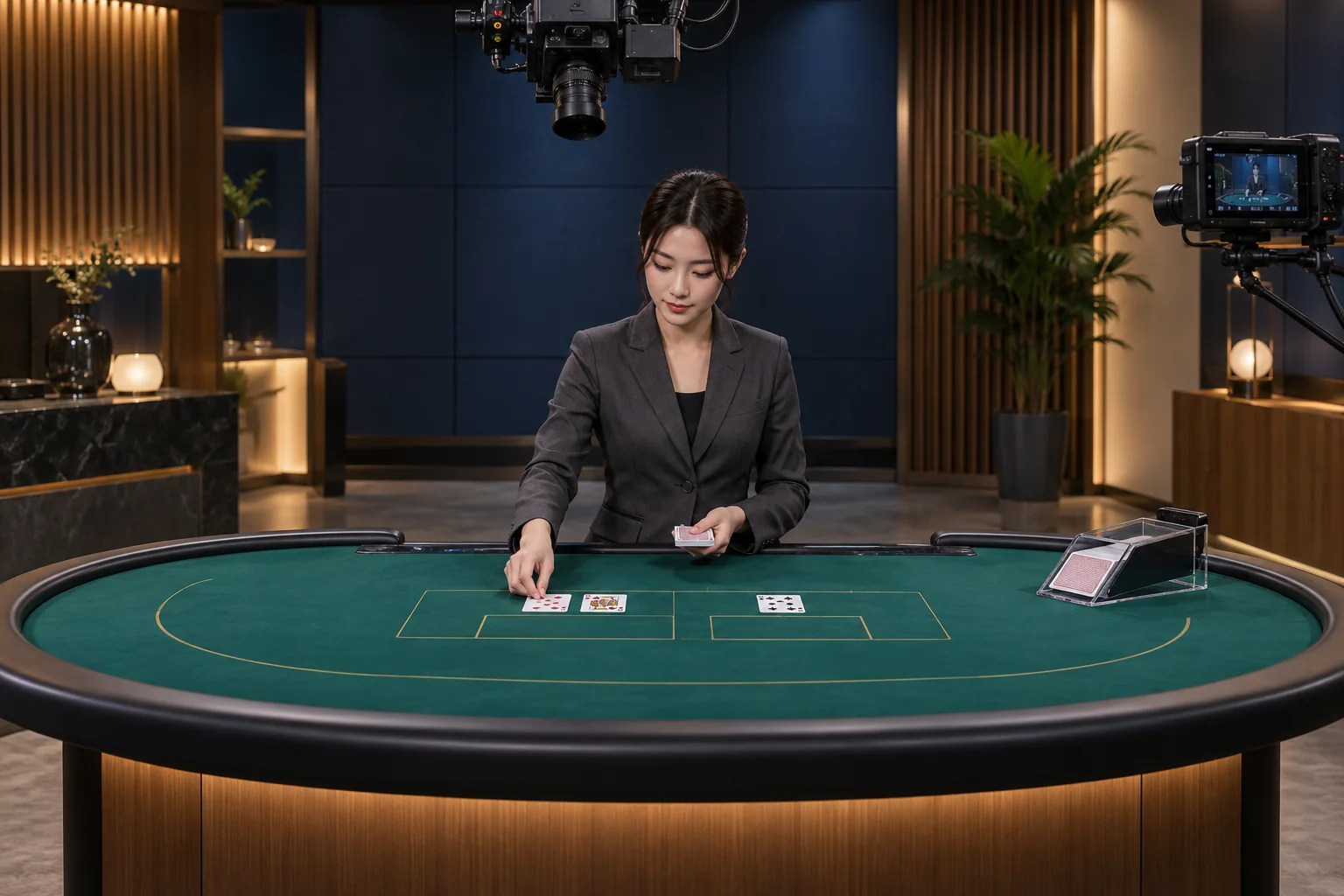
A live table is only one part of a casino studio. The room also needs space for the dealer, crew, cameras and control equipment, with clear staff routes, controlled acoustics and enough cooling. A Metro Vancouver precedent and Kahnawà:ke's 2026 rules show why the brief must identify the operating jurisdiction as well as the production system.
Design the production room around the game signal
A live dealer handles physical cards, chips or a roulette wheel while cameras capture the play. Production equipment selects and transmits picture and sound to the online service; the player's screen also carries account and wager controls. The room plan must accommodate the table, camera positions, crew and technical equipment. Interface controls belong to the connected product, with the video feed linking the two.
The project brief should name the games, table formats, dealer positions, camera views, operating hours, production staff and receiving platform. A single blackjack table has different camera and service needs from a multi-table floor. Camera positions, cable routes, crew space and racks follow that schedule, not a decorative mood board.
Keep the picture and the room in the same drawing set
A camera needs an unobstructed view, a technician needs access to it and the dealer needs a clear work position. Coordinate those requirements with safe circulation before scenery is fixed; otherwise a finished wall can block a cable route or a service door can open into the shot.
Use Canadian precedents in context
Metro Vancouver offers a documented Canadian precedent. In 2017, Evolution announced a planned 16,000-square-foot studio for British Columbia Lottery Corporation’s PlayNow service, with ten initial tables for blackjack, baccarat and roulette. Its first-quarter 2018 report recorded a February launch with BCLC, ten tables and five games. The 16,000-square-foot figure was a plan, not a verified as-built measurement.
This example links a physical studio to a provincial lottery corporation and online service; it does not set a Canadian standard footprint. Table mix, hours, staffing, technology and approvals vary by operator and jurisdiction.
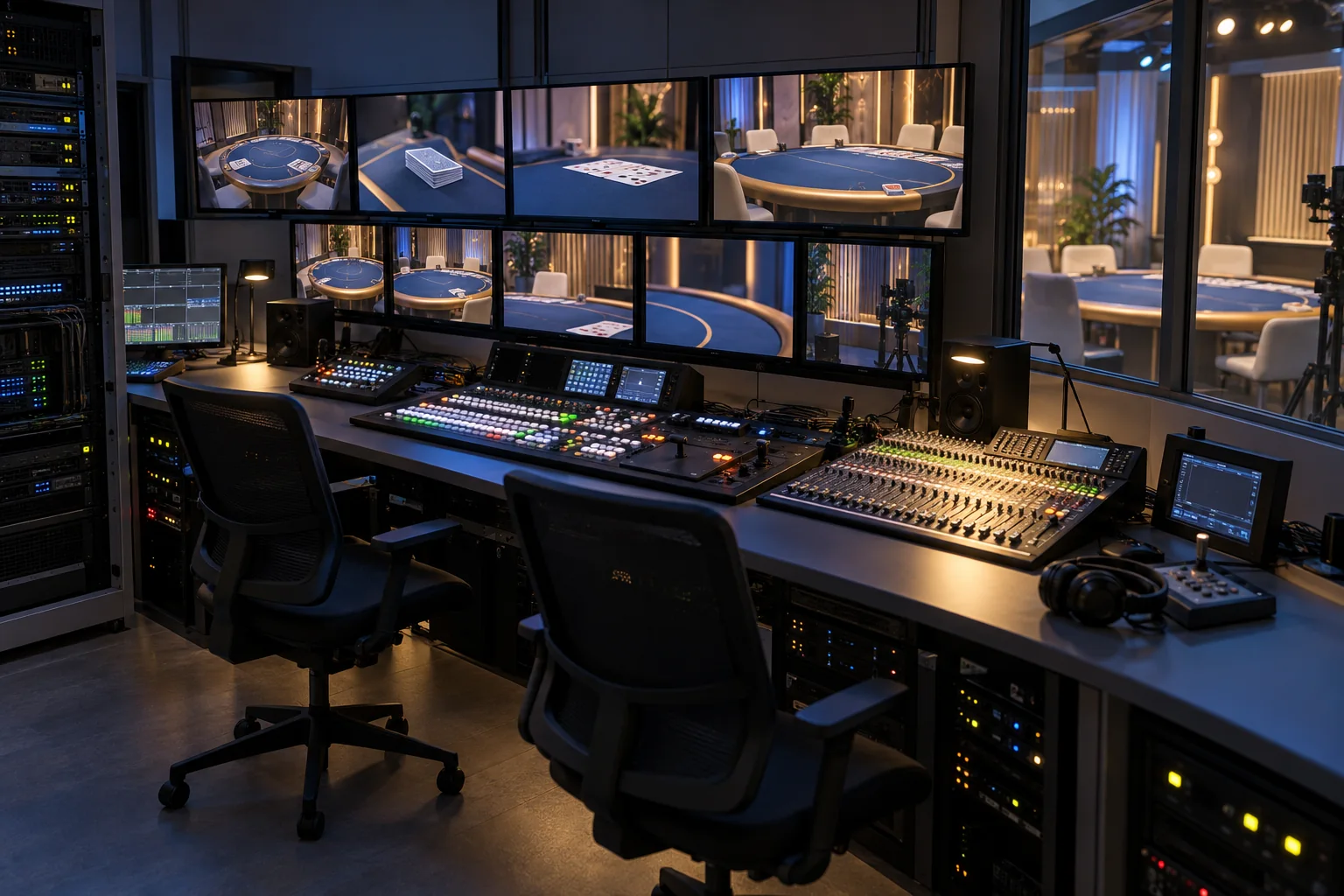
Kahnawà:ke sets a separate facility review
The Kahnawà:ke Gaming Commission’s 2026 interactive gaming regulations include a Live Dealer Studio Authorization. The facility must have a suitable location, structure and layout, pass applicable fire, safety, environmental and relevant health inspections, and provide suitable security and access. The review also covers parking, tables, cards, cameras, equipment and personnel training.
These provisions apply to that authorization and territory, not Canada as a whole. Before fixing a Canadian floor plan, list the gaming regulator, building and fire authorities, occupational-safety requirements and approvals for production equipment at the project address.
Lay out each table as a camera work cell
Begin with the playing surface. Mark the dealer’s position, the game elements that must read on screen and any closer camera view. Providers use multi-camera production, but framing depends on the game and approved format; no single camera count fits every table.
Mock up the view before fixing the set. Check that hands do not cover the game, dealer movements stay clear of lens lines and polished surfaces do not reflect into the camera. Test at final table height with the dealer, chairs, lights and accessories in place.
| Design layer | Question for the project team | Project records |
|---|---|---|
| Table and set | Are game elements legible in every approved view? | Mock-up and camera tests |
| Camera envelope | Can staff reach and replace equipment without crossing live play? | Positions, clearances and access plan |
| Dealer work area | Can the game procedure be performed safely? | Table review and operating rehearsal |
| Control room | Can staff monitor picture, sound and output? | Equipment schedule, signal diagram and test |
| Player interface | Does the feed fit beside game information and controls? | Integration specification and feed test |
Check service access before adding scenery
Leave a service route to cameras, lights and displays so repairs do not require dismantling scenery or moving a live table. Keep cable trays out of walking paths and show how replacement equipment reaches the set.
Coordinate light, sound and cooling
Camera lighting must keep the dealer and game elements readable without reflections from glossy tables or distracting shadows in the recorded view. Test fixtures with the actual cameras, cards, table finish and background before sign-off; a room that looks even to the eye can record differently.
Microphones must carry speech and game sounds while equipment, neighbouring activity and mechanical systems stay controlled. The City of Vancouver’s 2024 Arts and Culture Studios Technical Guidelines treat acoustics as project-specific and call for acoustical and mechanical coordination in music production spaces. They do not govern casino studios, but show why mechanical noise belongs in early room planning.
Absorptive finishes reduce reflections inside a room; sound-isolating construction limits noise passing between rooms. Identify which activities need quiet and coordinate doors, ducts, racks and partitions with an acoustical consultant.
Size mechanical services for a staffed broadcast shift
Lights, monitors, racks and people add heat. The mechanical design should use the actual equipment schedule and occupancy while avoiding noise at microphones. Keep filters, grilles and controls accessible after ceilings and scenic panels are installed.
Staff routes and controlled access behind the camera
Plan separate movements for dealers, supply staff, technicians and managers. Draw these beside the production view, then check doors and corridors with carts and equipment cases shown. Staff should be able to reach cameras and racks without appearing in the live picture.
With multiple tables, service corridors and support areas can keep deliveries and shift changes away from active sets. Mark public, staff-only and restricted doors, and show how equipment is serviced while a table is live.
Access control affects doors, equipment placement and records. Kahnawà:ke’s 2026 facility review includes studio security and access; coordinate those provisions with the relevant regulator and security lead.
Show these routes on the coordinated plan
- dealer entry, working position and exit
- staff access to table supplies and changeover areas
- technician route to cameras, lights and equipment racks
- equipment delivery path from loading point to set
- restricted doors and the access system that controls them
- accessible circulation and required exits under the applicable local code
Keep the maintenance route usable after opening
Check maintenance access during an operating rehearsal. If a camera, light or rack cannot be reached as planned, revise the layout before staff develop a workaround.
Commission the stream before the studio opens
A finished room still needs a complete production-chain test. Connect the table, capture equipment, control position, communications, network and receiving platform in operating order. Rehearse a normal round, changeover, feed interruption and recovery; the responsible operator should approve the output and views before launch.
A practical handover sequence
- Confirm the approved game, table layout, dealer position and camera views
- Test the picture and game action with final table finishes and lighting
- Check dealer speech and game sounds with doors and mechanical systems operating
- Run the feed through the receiving platform and check that its controls do not obscure required game information
- Rehearse shift change, cleaning, equipment replacement and restricted-door access
- Document unresolved issues, responsible owners, close-out dates and regulator sign-offs
The handover file should let the next crew restore an approved camera view after a lamp, lens or table is replaced. Keep the drawing, equipment and network schedule, lighting scene, acoustic and cooling information, access roles and maintenance instructions together. Mark what passed commissioning and which authority approved each game or studio condition.