
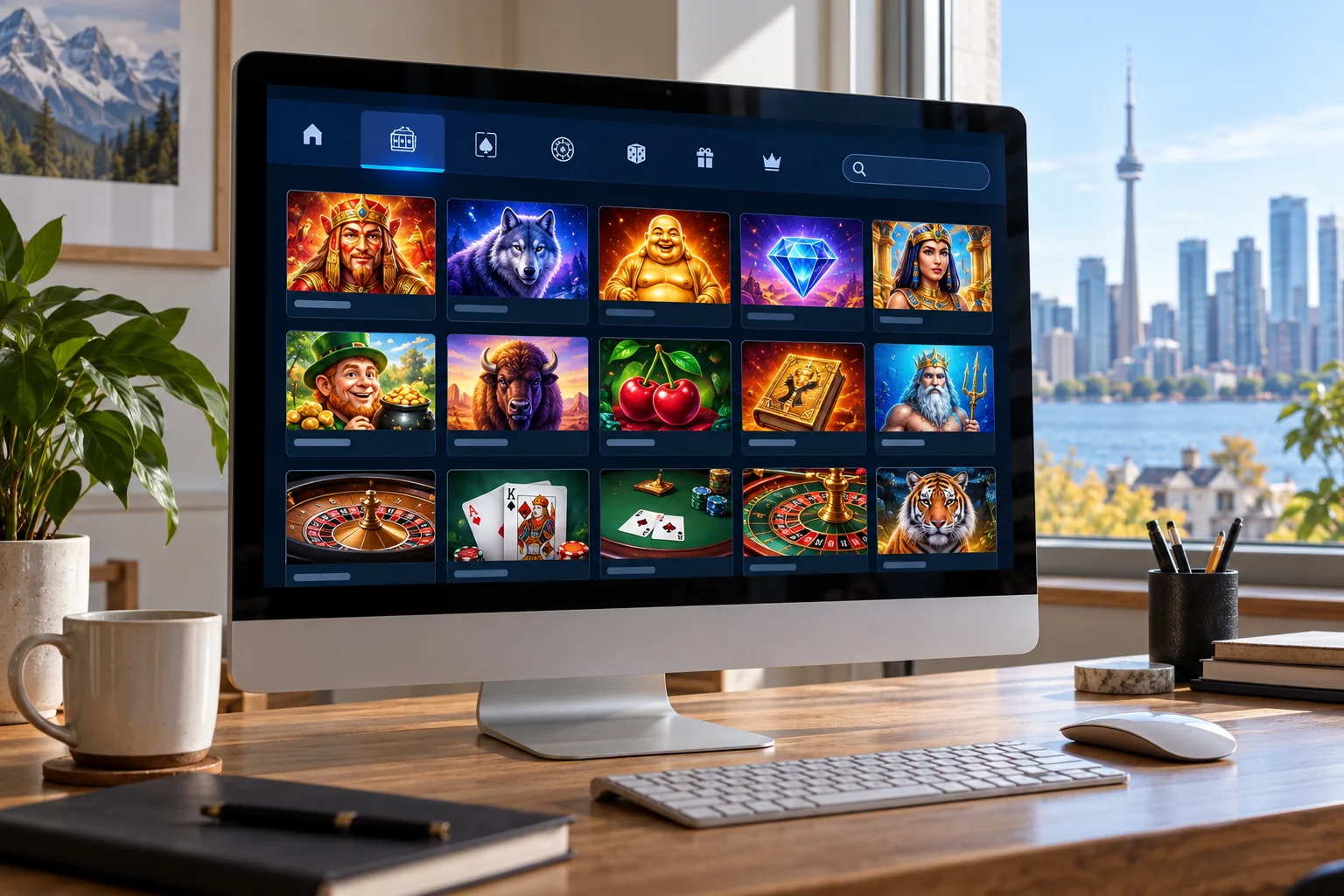
Finding a game online means using categories, search results and game cards; a casino floor relies on signs and sightlines. BCLC's PlayNow catalogue shows how digital and land-based games can share familiar labels while remaining distinct. A Canadian lobby also needs to reflect the province, age and catalogue available to each player.
Casino floors inform digital design, not screen layouts
Someone looking for blackjack in a physical casino follows signs and scans tables. On a website, that task depends on category labels, search results and game cards. The lobby can borrow familiar game names and imagery, yet it must also expose rules, availability and a reliable path into the chosen title. Those information paths are the digital equivalent of finding a destination on the floor.
BCLC's PlayNow help page says its online catalogue includes some titles and versions similar to those at BCLC casinos and gaming centres, some different ones, and features unique to PlayNow. The service can carry familiar games without reproducing the land-based floor or its complete inventory.
PlayNow's public navigation has no direct architectural counterpart. It separates Casino, Poker, Bingo, Sports, Live Casino and Lottery portfolios; within the casino area it exposes routes such as Featured, A–Z, New Games, Slots, Blackjack, Jackpots and Instants. Other operators group their catalogues around their own products and markets.
Keep the catalogue model visible to the person browsing
A lobby taxonomy should reflect the actual catalogue and explain its groupings. Do not let a decorative map or a row of neon-style tiles conceal the fact that the user is choosing among distinct game formats. Separate categories that lead to different experiences, such as slots, table games and live dealer tables, and name them in the language used by the operator's own catalogue.
Build categories from game types and search tasks
A category tree helps when a person already knows the type of game they want. A title directory helps when they remember a name. A search field helps when spelling, provider or format is known only in part. A well-organized digital casino lobby makes these routes available together instead of forcing every visitor through the same sequence of promotional shelves.
| Lobby element | Useful when the person | Information the element should expose |
|---|---|---|
| Game-type category | Knows the format, such as slots or blackjack | A clear category label and the games currently inside it |
| A–Z directory | Remembers a title or wants to scan the catalogue | Stable titles, readable ordering and an explicit empty state |
| Search | Knows part of a name, provider or feature | Relevant matches, query feedback and a way to clear the search |
| Featured or new collection | Wants to see a curated selection | Why a game appears there and when the collection changes |
| Live Casino route | Wants a streamed table rather than a digital-only game | A distinct entry point and a clear indication that the game is live |
Each route should agree with the game catalogue underneath it. If a game appears under more than one filter, its title and destination should remain the same. If a game is removed or temporarily unavailable, the card should not lead to a dead end. Record the category rules in a content model so editorial staff, product teams and search tools use the same labels.
Use more than one route to the same game
A person may reach a table game through a category, a title search or a featured collection. The W3C's Web Content Accessibility Guidelines 2.2 require more than one way to locate pages within a set in many cases, and say that headings and labels should describe their purpose. A thumbnail can add context; the text label still needs to identify the game.
Make each game card useful before it is opened
A game tile is a small product summary. The title should identify the game; the image can reinforce its theme; a secondary line can state whether it is a slot, a table game, a live table or a demo. A card should not ask a person to infer the format from a fantasy illustration or a provider logo. If the lobby supports game rules, a pay table or a demo, the card or next step should make that route clear.
BCLC's public casino guidance encourages visitors to try a free demo and review the rules and pay table for an online slot before deciding whether to play. A lobby card should lead from the image and title to those game details. A promotional label should not displace the title or the path to the rules.
A game card can identify
- game title and format
- provider where that information helps distinguish versions
- live, demo or play mode
- available rules, pay table or game information
- current availability for the user's market
- the action that opens the selected item
The card's action should be explicit. A whole clickable tile can work if its accessible name still identifies the game and its purpose. When separate controls are placed inside the tile, such as a demo button and a play button, make their labels and focus order distinct. Repeating the same 'Play now' label on a large grid gives little information to someone moving through controls with a keyboard or screen reader.
Filters and headings across devices
Filters help narrow a catalogue by a known property: game type, title, provider or live format. Put the current choices where they remain visible, name each filter and show when it is active. A results count and a clear way to remove a filter help people understand what changed. Avoid category names that only make sense inside the design team's workshop.
WCAG 2.2 includes success criteria for headings and labels, visible keyboard focus, link purpose, contrast, reflow and target size. In a casino lobby, that means users should be able to identify category controls, see which one has focus, read game labels against their backgrounds and use the interface after it reflows to a narrow viewport. These are accessibility design requirements to check in the actual interface, not assurances that a page is conformant simply because it has large tiles.
| Check | Lobby example | Review question |
|---|---|---|
| Headings and labels | Slots, Blackjack, Live Casino, search | Does the label describe the section or action? |
| Keyboard focus | Category tabs, filter controls, game tiles | Can a keyboard user see the active control and move through the same route? |
| Text and non-text contrast | Game names, icons, filter states | Can the label and selected state be distinguished from the background? |
| Reflow | Game grid and filter panel | Does content remain available when the viewport narrows? |
| Multiple ways | Search, categories and A–Z listing | Can a person locate a title without relying on one route? |
Keep controls separate from promotional imagery
A lobby can use branded art, animated banners and featured rows, but functional labels should remain readable when images fail, animation stops or text is enlarged. Do not encode selected state only with colour. Keep the focus indicator visible above tile borders and banners, and check that expanded filters do not cover the result being reviewed.
Account for Canadian market and catalogue differences
A Canadian casino lobby cannot assume that one operator catalogue serves every province. PlayNow is BCLC's service in British Columbia and shows its own mix of Casino, Poker, Bingo, Sports, Live Casino and Lottery. Ontario has a separate regulated-market directory maintained by iGaming Ontario. Its player page states that a person must be 19 or older and physically located in Ontario to play on the listed sites; the directory records sites offered by operators contracted with iGO.
A Canadian lobby should therefore be reviewed against the market it serves. The operator's product list, allowed games, age and location checks, support material and available languages can differ by jurisdiction. Keep the province-specific availability decision outside the visual category label: a game tile should not imply that a title is available everywhere in Canada simply because it appears in a shared catalogue database.
For Ontario, the current public directory is a practical reference for the regulated operator sites listed there. For B.C., PlayNow's own help and casino pages show a separate public catalogue. Treat those sources as market-specific snapshots and verify them again when a catalogue or regulation changes.
Test discovery with real catalogue tasks
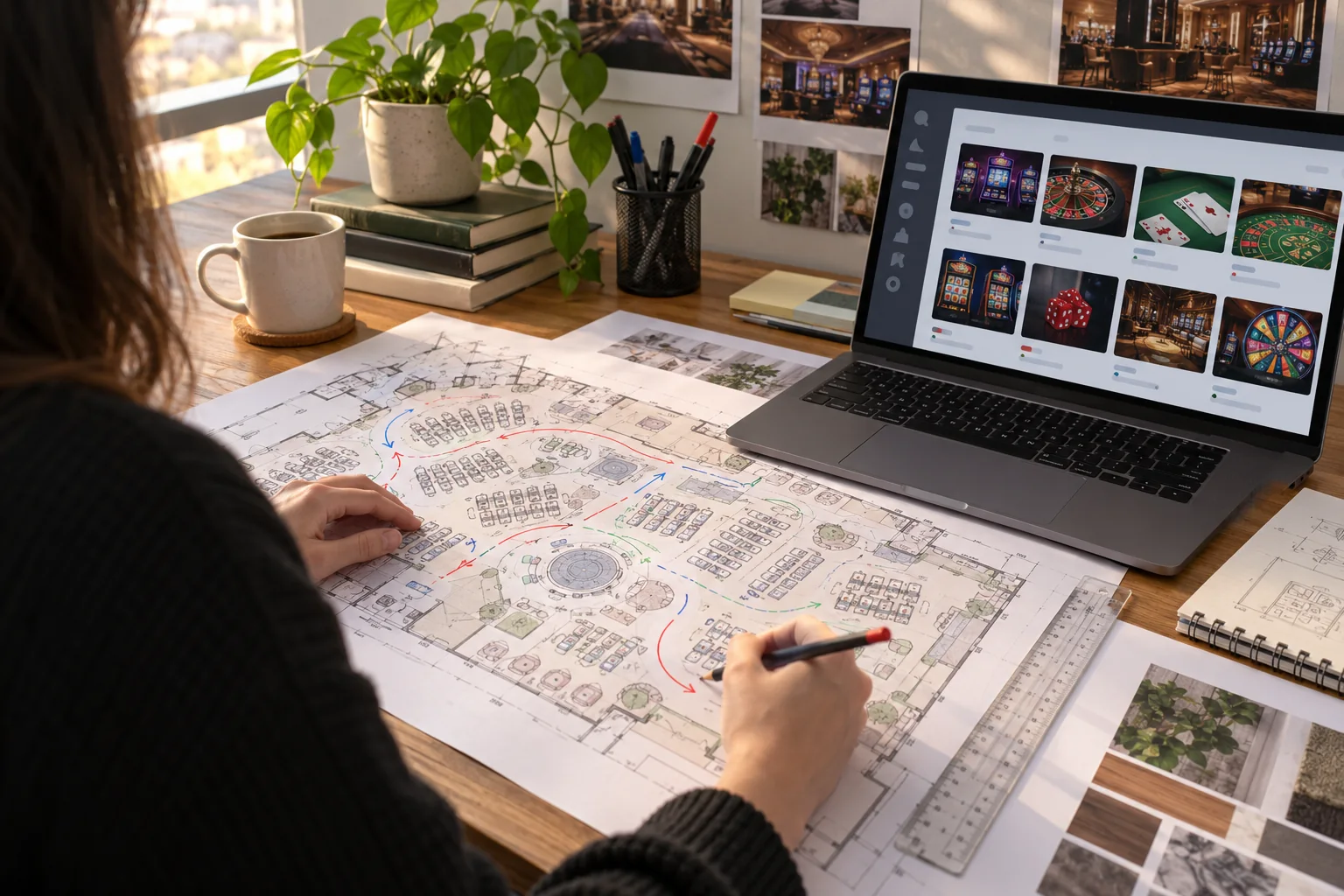
A lobby review should follow actual catalogue tasks: find a named game, locate the blackjack titles, open a live table, identify a demo and reach the rules or pay table. Note ambiguous labels, empty results and any uncertainty about market availability. Run the same tasks at desktop and narrow widths with keyboard navigation; a thumbnail that works with a mouse may leave a keyboard user without a clear route.
A short review record
- market and catalogue version tested
- task and starting page
- search terms and category route used
- game title and format shown before opening
- keyboard focus and label issues
- availability or rule information that was missing